


Language Learning - Duo Speak
4.452.00 Reviews
App Specs
- Version
- 9.9
- Updated On
- License
- Free
- Downloads
- 1,000,000+
- Developer
- Visionary AI
- Categories
- Education
- Platform
- Android
Screenshots

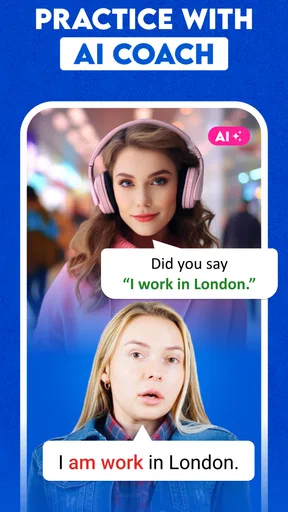
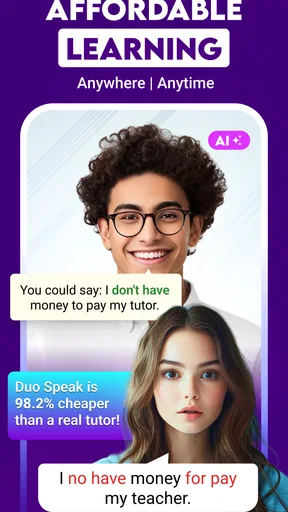
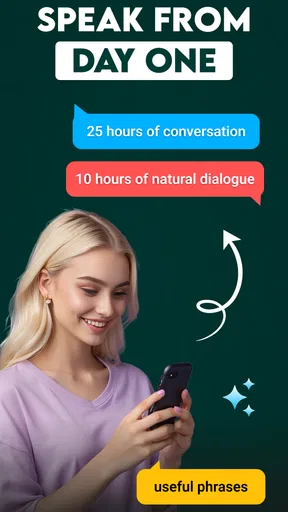
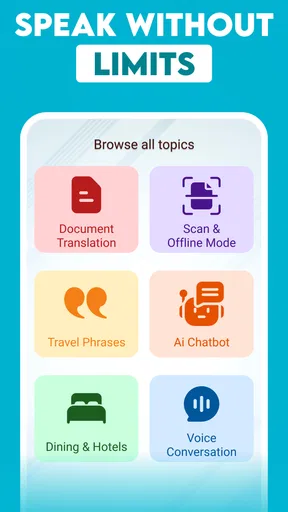
 Analysis by AppCompare
Before choosing a speaking app, I ask myself a practical question: do I need help getting words out, or do I need a broader course that builds English from the ground up? That distinction matters with Language Learning - Duo Speak. Made by Visionary AI, it is an education app centered on spoken practice with an AI tutor, so it makes the most sense for someone who can follow at least some English but hesitates when trying to answer aloud.
A useful way to judge it is to try one familiar topic, such as introducing yourself or explaining a small problem, then see whether the practice helps you express that idea more readily later. The aim is not to collect completed sessions or sound flawless to a screen. It is to make a real exchange feel less difficult. That focus gives this app a clearer role than a general-purpose English course, but it also means it will not meet every learner’s needs by itself.
Questions to settle before you start
Think about what currently slows you down. If you know words but cannot assemble a sentence quickly, speaking practice may address the gap more directly than another round of vocabulary review. If you are unsure about basic sentence structure, however, you may need explanations and guided lessons first. Being clear about that difference helps you decide whether this should be your main learning tool or one part of a wider routine.
Also consider where you will practice. Speaking aloud is useful, but it may feel awkward in a shared office, a crowded commute, or a quiet home where other people are nearby. A short private break can be more practical than trying to squeeze in a session wherever you happen to be. I would choose a repeatable time and place before judging whether the format suits me; otherwise, the obstacle may be the setting rather than the app.
The app is free to install and rated for Everyone. It has a 4.4 average from around 11,000 ratings and has passed 1 million installs, which gives a sense of its reach without telling me whether its approach is right for my own goals. It arrived in October 2022, and version 9.9 is listed for Android 8.0 or later. I treat those details as context; the more important test is whether speaking-focused practice is the skill I actually need.
Choose it for speaking practice, not as a complete course
I find it helpful to decide what success should look like before judging a speaking tool: perhaps answering a routine question with less hesitation, rather than mastering every part of English. That gives me a fair way to assess whether focused practice is earning a place in my day. With that goal in mind, the next question is where this approach offers something other study methods may not.
Start with the skill you avoid
Many learners can recognize a phrase on a screen and still struggle to say it naturally in a conversation. If that gap sounds familiar, an AI speaking tutor can make practice feel less exposed than immediately joining a live class or asking a fluent friend to correct you. The most sensible way to approach Duo Speak is as a place to rehearse speaking, rather than assuming it will replace every part of a language course.
Worth Reading Before You Choose

EA SPORTS FC Mobile 26 Is a Bigger Football Game, but It Takes Time

Flipboard Shows What News Apps Must Do Beyond the Feed

Switching to Android Auto Means Rethinking Your Driving Routine

Google Calendar Makes a Crowded Week Easier to Manage

Ludo King Makes the Most of the Minutes Between Plans

Baby Panda World Brings Quick Play to Modern Phones, but Its Game Library Feels Busy
Before settling into it, decide what “better English” means for you. If your goal is to answer everyday questions without freezing, regular spoken practice is directly relevant. If you mainly need to read academic texts, learn spelling, or prepare for a grammar-heavy exam, speaking practice may be only one small part of the work. I would pair it with materials that address those specific needs instead of expecting a tutor centered on speech to cover them all.
A practical test is to pick a situation you genuinely face: introducing yourself, making a polite request, or explaining a simple problem. Practice that kind of language, then notice whether you can use the phrases later without staring at a prompt. That is a more meaningful measure than how many sessions you complete. The point is not to sound perfect in the app; it is to make a real-world sentence easier to produce.
Make the routine fit ordinary days
The strongest use case is small, repeatable practice that fits around other commitments. For example, I might use a short break before work to speak through a familiar topic, then return later to try expressing the same idea with different wording. Repeating a thought instead of constantly chasing new material can reveal whether I am learning to retrieve language or merely reacting to prompts.
Another useful workflow is to keep a brief note after a session: one sentence that felt difficult, one expression I want to remember, and one situation where I could use it. The note can be kept outside the app; it does not depend on any particular feature. On the next practice session, I can try saying the idea again before checking my notes. This turns a conversational exercise into a simple loop of attempt, reflection, and retrieval.
The practical advantage of speaking aloud is that it exposes hesitation. Silent reading can make a sentence feel familiar even when it is hard to say. A spoken attempt makes the gap more obvious: perhaps I cannot find a verb quickly, or I know the idea but lack a natural phrase. That insight helps me choose what to practice next rather than spending every session on language I already recognize.
What an AI tutor can and cannot replace
An AI tutor is appealing when I want to practice without arranging a meeting or worrying about interrupting someone. It can provide a lower-pressure setting for trying to speak, which may help learners who feel self-conscious. But lower pressure is not the same as the full give-and-take of a human conversation. A person can bring personal context, unexpected reactions, and social cues that an app-based practice session may not reproduce.
I would therefore use Duo Speak as a rehearsal partner, especially before a conversation I care about, not as my only contact with English. After practicing a topic, try using it with a colleague, classmate, language exchange partner, or teacher when an opportunity comes up. Real conversation tests whether the words transfer when the other person does not follow a predictable learning exercise.
Turn practice into preparation for a specific moment
A good everyday scenario is getting ready for a short call with an English-speaking client or colleague. I would choose the point I need to make, say it in a few different ways during practice, and note any phrase that keeps tripping me up. Just before the call, I would review the idea rather than memorize a full script. That leaves room to respond naturally if the conversation takes a turn I did not expect.
This approach is also useful for travel situations, a first meeting, or explaining a work task, but it has a limit: practicing a prepared topic will not automatically make fast listening easy. To avoid mistaking rehearsal for fluency, I would follow up with a real exchange and notice which part caused trouble—finding words, understanding the reply, or taking a turn. Each points to a different next step, and only one may be well served by more speaking rehearsal.
Where the focused approach helps—and where it doesn’t
The focused format can make it easier to notice the exact moment a sentence gets stuck, which is useful when I already understand English but struggle to produce it. I would still keep a separate route for grammar, reading, or human feedback if those are my priorities. The practical choice is not simply whether to use a speaking app, but how to combine practice with the kind of learning support I need next.
A better fit than tap-through practice for hesitant speakers
Compared with vocabulary flashcards, Duo Speak is aimed at a different point in the learning process. Flashcards can help with recall of individual words, but recognizing a word does not automatically teach me to assemble it quickly in speech. If I already know plenty of vocabulary but struggle to say complete thoughts, speaking practice is likely to feel more relevant than adding another stack of isolated terms.
It also occupies a different space from a traditional textbook or structured classroom course. Those options may be preferable when I need a planned sequence, detailed grammar explanations, or a teacher to diagnose recurring errors. Duo Speak’s appeal is narrower and clearer: it gives a learner a way to focus on saying English, without making that the only method they use.
For a beginner who needs to build basic vocabulary and understand simple sentence patterns, speech practice alone may feel demanding. I would first establish a small foundation with beginner lessons or a reference resource, then use speaking sessions to make those phrases active. Conversely, a learner who already has basic comprehension but avoids speaking may be ready to benefit sooner from a speech-centered tool.
Useful practice still needs a learner’s own judgment
One trade-off with AI-supported language learning is that fluent-sounding output is not the same as knowing why a phrase works. If feedback or suggested wording appears in a session, I would treat it as material to examine, not automatically as a rule for every situation. Keep track of repeated uncertainties and check them against a reliable grammar reference or a teacher when precision matters.
Accent goals also deserve some thought. The best outcome for many learners is being understandable and comfortable, not imitating a particular accent. Use practice to notice whether your words are clear and whether you can keep a thought moving. If you need specialized pronunciation coaching for work, public speaking, or a high-stakes assessment, a specialist teacher may offer more targeted guidance than a general speaking routine.
There is also a difference between practicing alone and learning to respond spontaneously. A learner can become more comfortable saying prepared ideas yet still find interruptions or fast exchanges difficult. To bridge that gap, alternate app practice with real conversations, even brief ones. This prevents a useful rehearsal habit from becoming a substitute for the unpredictable listening and turn-taking that conversation requires.
Check the payment model before making it a habit
The app is free to download, while in-app purchases range from $2.99 to $59.99 per item. That is a broad enough range that I would check what a purchase actually includes before paying, rather than assuming a particular item is necessary. Start with the free experience and decide whether the speaking routine is helping you; only then compare any paid option with your own budget and learning needs.
This matters especially if you are testing several English resources. Paying for multiple tools can create more subscriptions or purchases than practice time. I would choose one primary method for speaking, one source for explanations or vocabulary if needed, and a realistic weekly routine. A purchase makes sense only if it removes a specific obstacle or gives you something you will use consistently.
Switching is easy; building consistency is the harder part
Trying a new learning app has a small setup cost, but changing tools every few days can interrupt progress. Before switching away from Duo Speak, ask whether the problem is the app’s approach or simply an inconsistent routine. If you have not yet practiced the same useful topic more than once, you may not have given speaking practice a fair test. On the other hand, if you need structured lessons, detailed correction, or live interaction and are not getting those from your current approach, moving to a course or tutor is a reasonable choice.
There is no need to abandon materials that already work. Keep your existing reading or grammar study and add spoken practice where it fills a real gap. If you do decide to use a different app, carry over the topics you found difficult and try them there; that makes the comparison about learning value, not just novelty or interface preference.
Who should try it—and who should choose another route
I would recommend Duo Speak to learners who want a convenient way to practice forming spoken English and who are willing to say answers aloud, even when they are unsure. It is particularly relevant if you feel that you understand more than you can express. The everyday test is simple: after a practice session, can you handle one small real-world exchange with less hesitation? If that is the skill you want, a focused speaking tool is a sensible addition to your routine.
I would not make it my only resource if I were starting from zero, preparing for an exam dominated by reading and grammar, or looking for a human teacher’s detailed coaching. In those cases, a structured course, reference book, class, or tutor may be a better foundation. Someone who dislikes speaking to a device may also find flashcards, written exercises, or live lessons more motivating, depending on what feels comfortable.
My recommendation is to try the free app with a clear goal rather than treating it as a complete promise of fluency. Choose a familiar situation, practice saying a few thoughts, and revisit them later without relying on the same prompts. If that routine helps you speak more readily outside the app, keep it alongside the resources that cover your other needs. If you need deeper structure or human feedback, use that as a signal to choose a different primary method, not as a reason to dismiss speaking practice altogether.
Pros
- Bite-sized lessons are easy to fit into a busy day.
- Speech exercises give learners a chance to practise speaking aloud.
- A clear interface makes lessons easy to navigate.
- Progress tracking helps you keep an eye on your learning routine.
- Useful for reviewing vocabulary and everyday phrases.
Cons
- Speech recognition may not catch every accent or pronunciation.
- Some lessons can feel repetitive after regular use.
- A stable internet connection may be needed for parts of the app.
- The free experience may include ads or limits on lesson access.
- It may not provide enough depth for advanced language learners.
FAQs for Language Learning - Duo Speak
What is Language Learning - Duo Speak?
Language Learning - Duo Speak is presented as a mobile app for practicing language skills. Before downloading, check its store listing to confirm which languages and learning activities it currently offers, since features can vary by version and region. The listing is also the best source for details about lesson structure, supported devices, and whether the app suits your experience level.
Is Language Learning - Duo Speak free to use?
The app may be available to download without an upfront charge, but that does not necessarily mean every feature is free. Review the store page for in-app purchases, subscription plans, trial terms, and any limits on lessons or practice. If you start a trial, note its renewal date and cancellation process so you can avoid an unexpected charge.
Which languages can I learn with Duo Speak?
The languages available can depend on the app’s current version, your device, and the options offered in your region. Check the app’s listing and its in-app language menu before committing to a course. Also consider whether it supports the language you want to learn from your preferred interface language, as course availability and learning direction may differ.
Does Language Learning - Duo Speak work offline?
Offline access should not be assumed: some language-learning apps require an internet connection to load lessons, save progress, or use audio and speaking activities. Check the app description and settings for download options, and test a lesson before relying on it while traveling. You may also need a connection for initial setup, account sign-in, or progress synchronization.
What should I check about privacy and permissions before installing Duo Speak?
Read the app’s privacy information and requested permissions before installation, especially if it uses microphone access for speaking practice or asks you to create an account. Check what information may be collected, how it is used, and whether deletion or account controls are available. Permission names and data practices can change, so consult the current store listing and in-app policy.


